Body Love Wellness
by Golda Poretsky, H.H.C.
www.bodylovewellness.com
Last week, I came across this gem of a post about the history of antiperspirant/deodorant.
You see, as recently as the early 1900’s, Americans weren’t too worried about sweaty or smelly underarms. In this time before air conditioning, when people often wore a lot more clothing than we do, even in the summer, sweaty and smelly underarms weren’t really a concern. In fact, the word “underarm” wasn’t really a word until advertisers needed a nicer sounding euphemism for armpit.
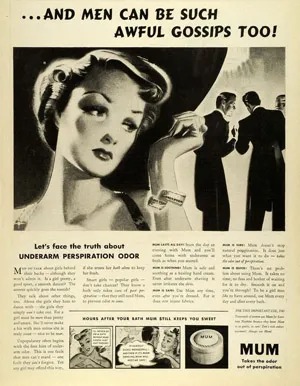
So why did things change? Why did so many Americans start buying antiperspirant/deodorant, so that it’s now an $18 billion a year industry?
It’s very simple. Advertisers made up a problem. They convinced women that their odoriferous underarms were the reason they weren’t getting dates. They convinced men that their smelly pits were unmanly and the reason why they weren’t climbing the corporate ladder.
And the big capper — they convinced people that using this stuff was healthy. They made antiperspirant/deodorant so normal that it became a regular part of the ritual of puberty.
Sound familiar?
The history of dieting is a fairly similar tale. It may have started earlier and had different players, but there are certain tropes in this story that bear a similar stink.
There was actually a time, even here in America, when fatness wasn’t considered a problem. Until the early 20th century, doctors were mostly concerned with their patients weight when they were noticeably losing weight. Sudden weight loss could indicate a dangerous wasting disease, like tuberculosis.
Two of the earliest dieting advocates, William Banting and Helen Densmore, also had to convince people that fatness was a really bad thing, bad enough that you should buy their pamphlets, follow their meal plans, and take their “morning cordial” (Banting) or weight loss tea (Densmore), both of which contained laxatives.
Both of these diet marketers conflated fat with ugliness and with immorality. Their diets were proscriptive and plainly dangerous, with Densmore actually telling people to fast for as long as 30 days if her diet didn’t work.
The genius of obesity epidemic rhetoric is that it takes this normal thing –bodily diversity–and pathologizes it. Just like anti-perspirant marketers had to convince people that underarm sweat and smell is disgusting and will keep you from getting dates and jobs, diet marketers had to convince people that fat was disgusting and would keep you from getting dates and jobs. They keyed in to people’s deepest fears of social ostracism and inability to support themselves and made scads of money in the process.
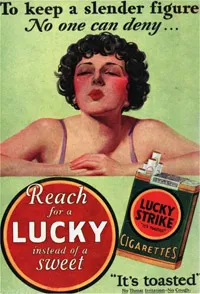
Fast forward through about 100 years of diets, from Horace Fletcher’s chewing diet, to the tapeworm diet (I wish I was kidding) to the Master Cleanse (yes, that’s a diet, let’s get real here) to the Nicotine Diet to the Cabbage Diet, to the HCG diet (it’s from the 60’s and it’s still a bad idea, by the way) to all the “lifestyle plans” (Weight Watchers, Jenny Craig etc.) and what do you have — a society convinced that fat is bad and that dieting is the answer. Not only do they “know” that fat is bad and dieting is good, they are convinced that the fact that dieting only worked in the short term is their fault. That really is brilliant marketing.
Promoters of anti-perspirants also had to spend a lot of time and money convincing people that their product was healthy. Quite naturally, people were dubious of a product that blocked the natural cooling and excretion process of sweating.
Nowadays, very few people worry about this problem (except for folks like me who use stuff like this), just like very few people seem concerned about the negative effects of diets, diet products, and weight loss surgery.
In the early 1990’s, more researchers were getting hip to the reality that the vast majority of human beings were incapable of sustained weight loss, and that these attempts to lose weight were causing more problems than they were solving.
As you can imagine, the multi-billion dollar diet industry was not cool with this reality. So they made sure to fund their own weight loss “research” that would lead to the conclusions that they needed to keep marketing weight loss. And it worked. These conclusions get repeated so often that they are now believed to be “common sense” — fat is unhealthy and weight loss is healthy. Any attempts to lose weight, be they diet pills, fake fats, fake sugars, weight loss surgery, or good ole dieting are healthier than OMG just being fat.
If you think about it, the problem of “obesity” is a marketer’s dream. Despite the rhetoric, it doesn’t actually kill anybody, so the diet industry has a lifelong customer. There’s no cure for it, and the supposed cure (dieting or weight loss surgery) causes a variety of problems, including weight gain, which just keeps the customer hooked in. Plus, lots of folks who aren’t fat are convinced that they’re fat or going to become fat, so they buy the product as well. This is marketing heaven!
I hope I’ve demonstrated here that our collective beliefs about fat and weight loss are utterly fabricated and meant only to sell products. It’s time to investigate these beliefs and give our bodies (including our underarms) a break!
If you find the history of dieting as horrific and fascinating as I do, check out these wonderful books!
And for a quick hit of facts about fat, check out this pos.
Golda is a certified holistic health counselor and founder of Body Love Wellness, a program designed for plus-sized women who are fed up with dieting and want support to stop obsessing about food and weight. To learn more about Golda and her work, click here.
“I scheduled a session with Golda because I thought she could really help me explore my body issues and learn to love myself how I am. I anticipated spending some time talking about my current body image and some past experiences that have affected it, as well as my goals for the future. Golda helped me map out what my ideas were for how I would like to see myself and treat my body. It was nice using her methods to imagine my future self-image and get some ideas on how to take small steps toward my goals. Anyone who has dreams of having a positive body image, a healthy relationship with food an…”



Get my top 5 Body Love Tips and more when you subscribe!
I will never give away, trade or sell your email address. You can unsubscribe at any time.
Copyright © 2008-2018 Golda Schein
All rights reserved.